Stop Asking for the Lowest Price. Start Asking for the Best Total Cost.
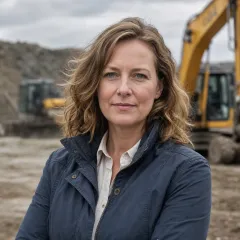
I manage procurement for a mid-sized heavy civil contractor. For the past 8 years, I've been responsible for sourcing everything from Kobelco excavator hydraulic oil to annual crane inspections and, yes, even the bucket bag for our SK210. My annual budget hovers around $480,000. I've negotiated with over 40 vendors. And I can tell you this without hesitation: the cheapest option almost always costs you more in the long run.
Here's the thing: when you're looking at a Kobelco 80 excavator or scheduling a crane inspection, the initial quote is just the opening act. The real story—and the real cost—is in what happens after you sign.
"That $150 savings on oil? It cost us $2,200 in repairs when we used a blend that didn't meet spec." — My note in our cost tracking system, Q2 2023.
My Three Rules for Not Getting Burned by Cheap Quotes
I know the pressure to cut costs. I live it. But over the years, I've developed three rules that have saved us more money than any discount ever could.
Rule 1: Never Trust a 'Compatible' Hydraulic Oil Without a Test
We service a fleet of Kobelco machines, including an 80 excavator and a couple of older SK200s. The OEM spec for hydraulic oil is specific. It has to do with viscosity at operating temperature and anti-wear additives. A "compatible" oil at 60% of the price? Tempting. I fell for it once.
I knew I should run a sample. But I thought, 'what are the odds?' The oil looked right, smelled right. Two months later, we had a pump failure on the Kobelco 80. The repair bill was $3,800. The oil change cost us $180. The 'savings' on the oil? Maybe $90. That $90 decision cost us $3,800.
Now, I only buy genuine Kobelco excavator hydraulic oil or a spec-matched alternative from a vendor who provides a certificate of analysis. Period. It's non-negotiable.
Rule 2: A Cheap Bucket Bag Will Cost You a Load
Look, a bucket bag for a wheel loader or excavator is a consumable. It's fine to be cost-conscious. But there's a line between 'value' and 'garbage.' I learned this the hard way when we ordered 50 cheap bags for a road job. The first one ripped on a large rock. The second one spilled a half-load of dirt. By the end of the week, we'd lost three loads of material and wasted 4 hours cleaning up.
The 'cheap' bag cost $12. The good one? $28. The total loss from the cheap bags (including the cleanup and lost material): roughly $500. The premium bag would have cost us $800 total. We spent $1,100 on the cheap option. It's a simple math, but when you're in the field, it's easy to miss.
Now, our policy is: buy the mid-tier bag. It costs more upfront, but it lasts twice as long and rarely fails. That's the kind of decision that keeps my budget on track.
Rule 3: 'Who Should Inspect a Crane?' Not the Cheapest Guy.
The question of 'who should inspect a crane?' is one of the most dangerous decisions you can outsource to a low bidder. In 2021, we hired a third-party inspector who quoted 30% less than our usual provider. I was hesitant. I went back and forth for a week. Our usual guy was $1,800. The cheap quote was $1,200. I chose the cheap one.
The inspection report came back clean. But two weeks later, our operator noticed a hairline crack on the boom during a routine walk-around. The cheap inspector had missed it. The repair cost $6,500 and took the crane out of service for three days. Lost revenue? Another $3,000. Total cost of that 'savings': $8,300.
To be fair, not every cheap inspector is bad. But you're playing a high-stakes game. The cost of a mistake involves safety, liability, and lost time. When it comes to crane inspections, I don't ask 'how much?' I ask 'who?' and 'what's your certification?' If they can't provide a clear answer, I walk.
The Counter-Argument (And Why It's Wrong)
I get it. Budgets are real. Sometimes you have to go with the lowest quote because that's all you have left in the fiscal year. I've been there. I've signed that PO with my stomach in knots.
But here's what I've found: when I am forced to go cheap, I double down on oversight. I inspect the oil myself. I check the bucket bag before every shift. I call for a second opinion on the crane inspection. The low price is a signal to spend more of my time, not less. And in 7 out of 10 cases, I still regret it.
"The bitterness of poor quality remains long after the sweetness of low price is forgotten." — Old saying that my spreadsheet confirms.
My Final Word: Total Cost of Ownership is the Only Number That Matters
When I audit our spending at the end of the year, the cheap purchases are almost never the winners. The genuine Kobelco excavator hydraulic oil that works perfectly for 2,000 hours? That's a winner. The bucket bag that lasts 3 months instead of 3 weeks? Winner. The crane inspector who charges a premium but catches a micro-crack before it becomes a catastrophe? That's the most valuable money we spend.
So next time you're comparing quotes for your Kobelco 80 excavator or wondering 'who should inspect a crane?', don't just look at the price tag. Ask yourself: what is the total cost of this decision? If the numbers include risk, downtime, or rework, the 'cheap' option is almost certainly the most expensive one.